Fueling the Future with Astrid Campos ’26
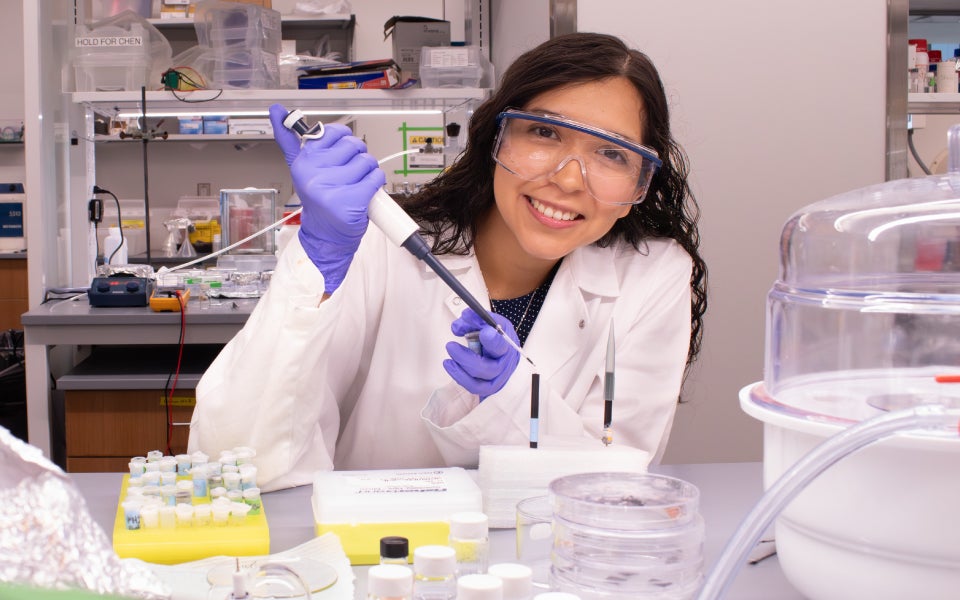
A native of Monterrey, Mexico, Astrid Campos Ph.D. ’26 is studying materials science and nanoengineering with a focus on renewable energy and energy conversion. She is grateful for Rice’s supportive community, from campus leaders to the generous donors who have shaped her academic journey.
Astrid Campos' eyes sparkle as she describes an article she recently read about curtailing carbon emissions in shipping.
The researchers, she explains, have created a prototype vessel that uses electricity from solar panels to split hydrogen from seawater, store it in a stable solid form, and use it to fuel the ship. Its combustion process produces clean water as a by-product — water that can be used on board or safely returned to the ocean. The innovative approach marks a major leap toward clean, sustainable shipping, and for Astrid, it offers a glimpse into the kind of materials science research that excites and motivates her.
"Right now, we are facing a global paradox, which is energy demand is rising to fuel economic growth,” she says. “That growth is often tied to harmful carbon dioxide emissions. My own research aims to break that link."
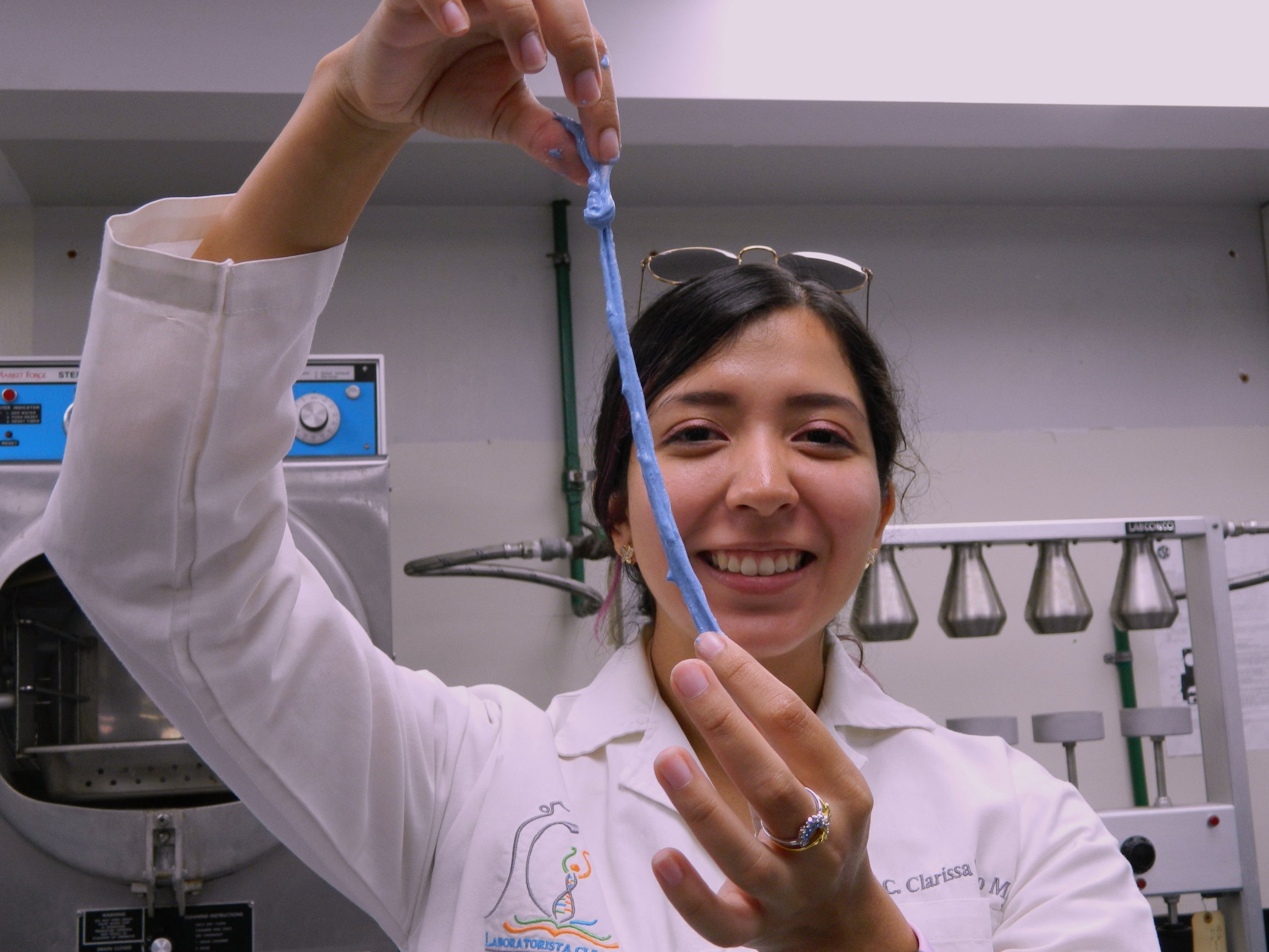
She goes on to explain: "I engineer materials at the atomic level to act as high-speed lanes for chemical reactions. These materials are behind technologies like green hydrogen production and CO2 recycling. With these advancements, we can meet energy demands while moving towards a carbon neutral and energy independent future."
Astrid discovered her passion for chemistry when she was selected to compete in Mexico's Chemistry Olympiad. As one of the top 10 high school chemistry students in Nuevo León, she earned a spot in an intensive, monthslong training program at the Universidad Autónoma de Nuevo León (UANL). There, she audited university-level courses in inorganic, organic and physical chemistry while completing written and practical assessments. From this group, the six highest-scoring students advanced to the three-day national competition. Astrid qualified for nationals two years in a row, earning a bronze medal her first year and a silver the next.
"The preparation was intense, but I was happy to get up and do it again the next day," she says. "That's how I knew chemistry was my place for life."
Thanks to her stellar performance in the Olympiad, Astrid received scholarship support to pursue her B.S. in industrial chemistry from UANL. While there, she learned about Rice's Gulf Coast Undergraduate Research Symposium (GCURS), a prestigious conference where undergraduates from around the world can present their work and engage with faculty, fellow researchers and peers in their field. She applied and was accepted, and once on campus she fell in love with Rice — both its research opportunities and welcoming community.
"I met Dean Seiichi Matsuda and Jennifer Hunter from the Office of Graduate and Postdoctoral Studies, and they encouraged me to apply for a doctoral program. I didn't know it was possible to go straight from my undergrad to a Ph.D.," she said.
She entered the program in fall 2020, when the COVID pandemic was at its peak. Homesickness made the adjustment difficult, but it was also an exciting time of growth and new connections.
"One of the best parts about Rice is the community, which is very international," she says. "I was able to connect with the Spanish-speaking community, which helped my homesickness. I have found some of my best friends here."
She also took comfort in the mentorship of Rice faculty, including Dean Matsuda. "I believe our sense of community starts at the top. I don't think that happens in other schools. He's been a great example of the culture of care."
For Astrid, philanthropic support for graduate students is another powerful example of how that culture of care extends beyond the hedges. Last year, the Rice community contributed more than $2 million in current-use funds to graduate student priorities. She cites this year's 24-Hour Challenge, Rice's annual giving day, as particularly inspirational.
"Seeing so many people donate in one day made me feel like someone out there is rooting for me, even without knowing me," she says. "To Rice donors: thank you. Your donations give us stability and support as students. My degree is not only about being in the lab; it's about developing a full student experience."
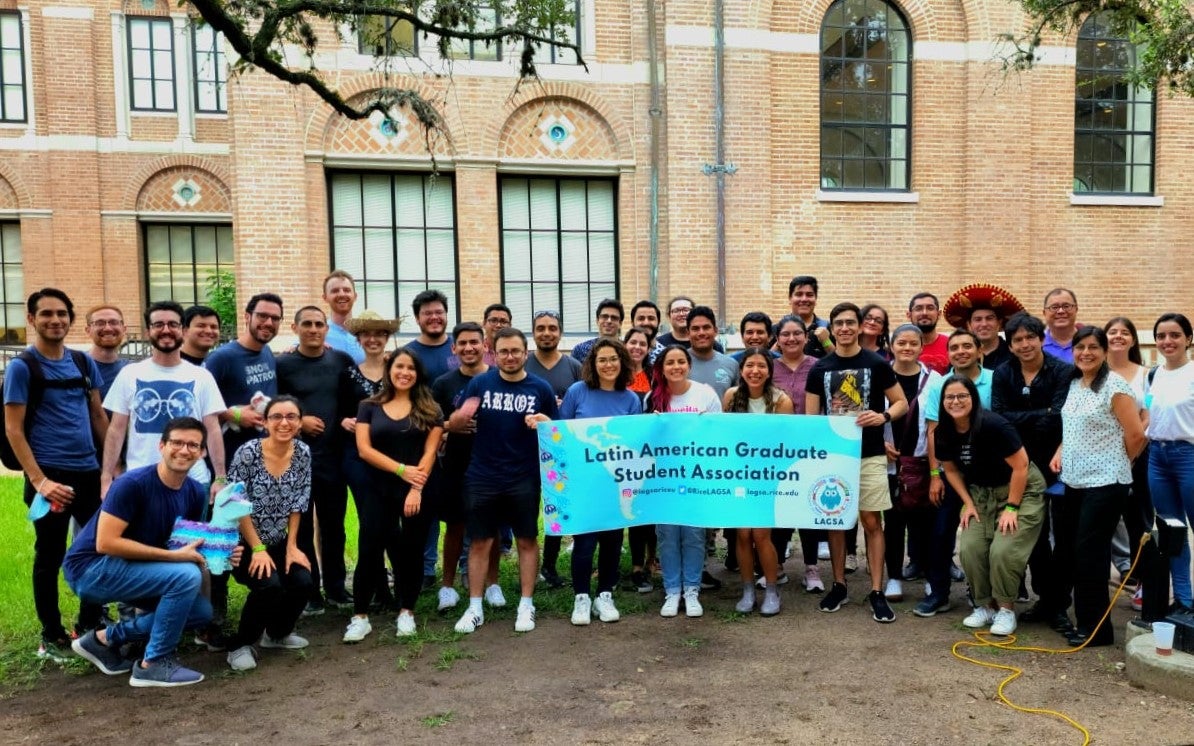
For Astrid, that student experience has been defined by opportunities to learn from mentors and to guide others in turn. She has held leadership roles in the Materials Science and Nanoengineering (MSNE) Graduate Student Association and Latin American Graduate Student Association and volunteered as a graduate fellowship coach, helping her peers apply for competitive research funding.
"Many people have helped me in my academic path," she says. "Sometimes I've lost my way, and there have always been people willing to guide me. Any success I've had belongs to them as well. I feel compelled to give to others."
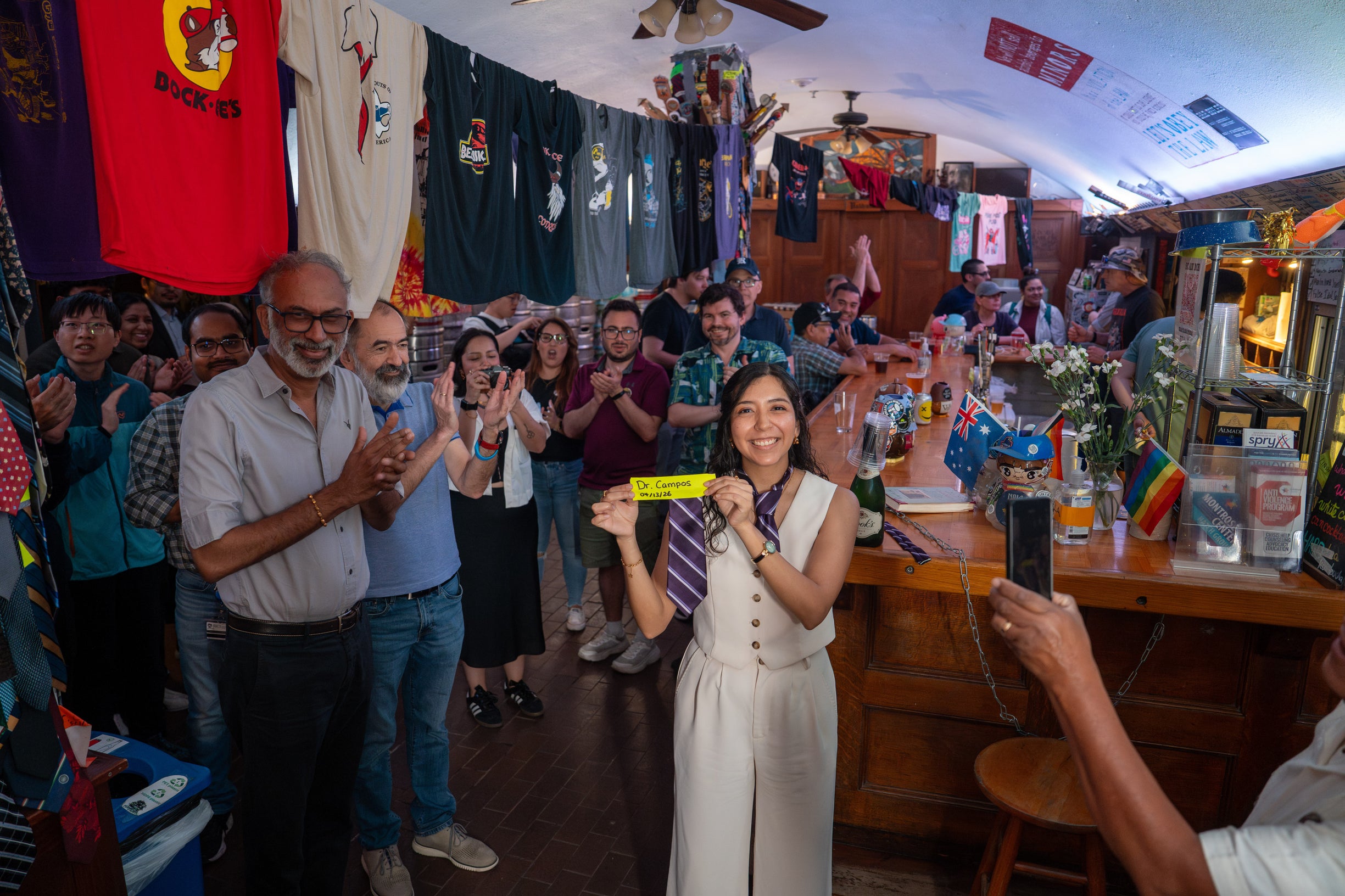
In mid-April, Astrid successfully defended her thesis and participated in her tie-cutting ceremony at Valhalla, a graduate student tradition. This summer she plans to wrap up her projects at Rice and prepare the findings for publication ("I hope!" she says with a laugh). She's now weighing whether an academic path or an industry role best aligns with her goals.
"I was almost certain I wanted to go into academia because I love mentorship and service," she says. "But I'm realizing those opportunities exist in industry as well. Either way, I have found my passion in research and innovation."
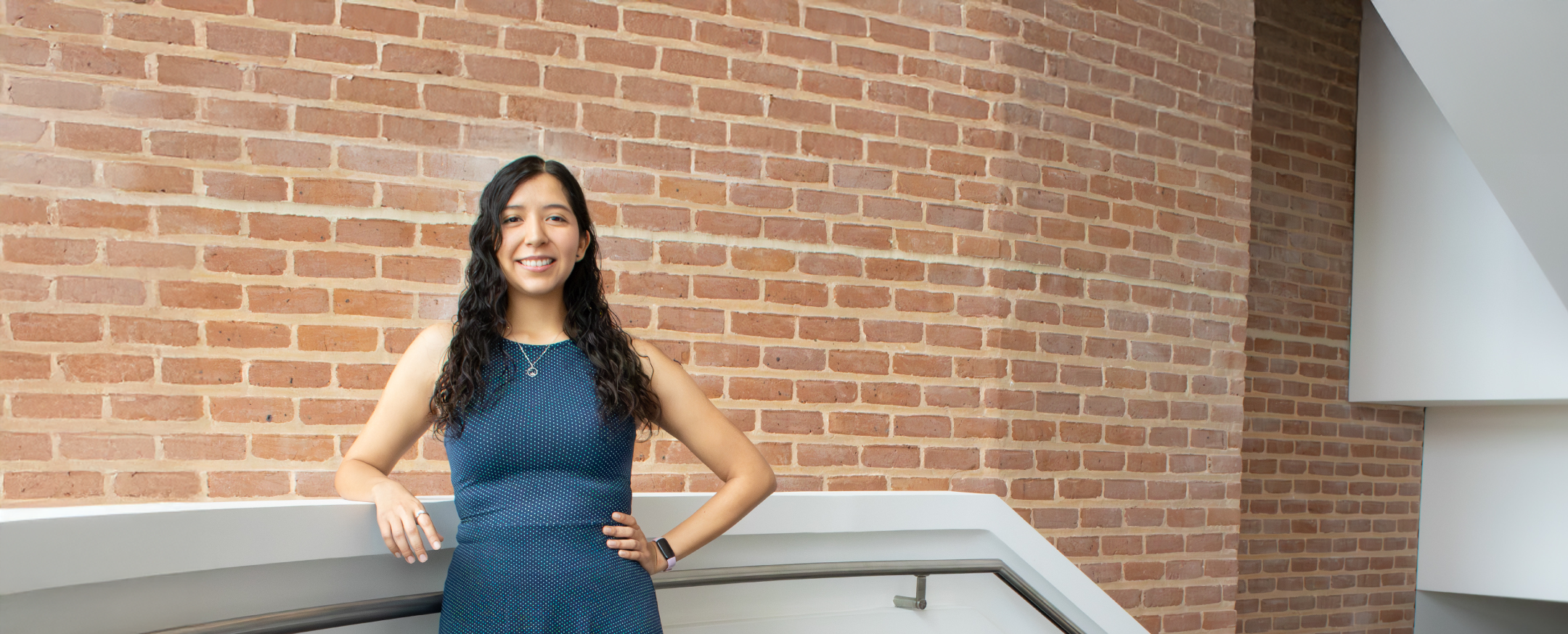
“My journey has had its ups and downs — sometimes more down than up — but there has always been a community giving me support.”
— Astrid Campos ’26
Learn more about The Rice Fund, and the impact of your support, at giving.rice.edu/rice-fund.
Giving to Rice
Development & Alumni Relations
P.O. BOX 1892
Houston, Texas 77251-1892
Phone: 713-348-4991
Email: giving@rice.edu