The Keck Foundation Lights the Way for Innovation
By Sophie Kidd
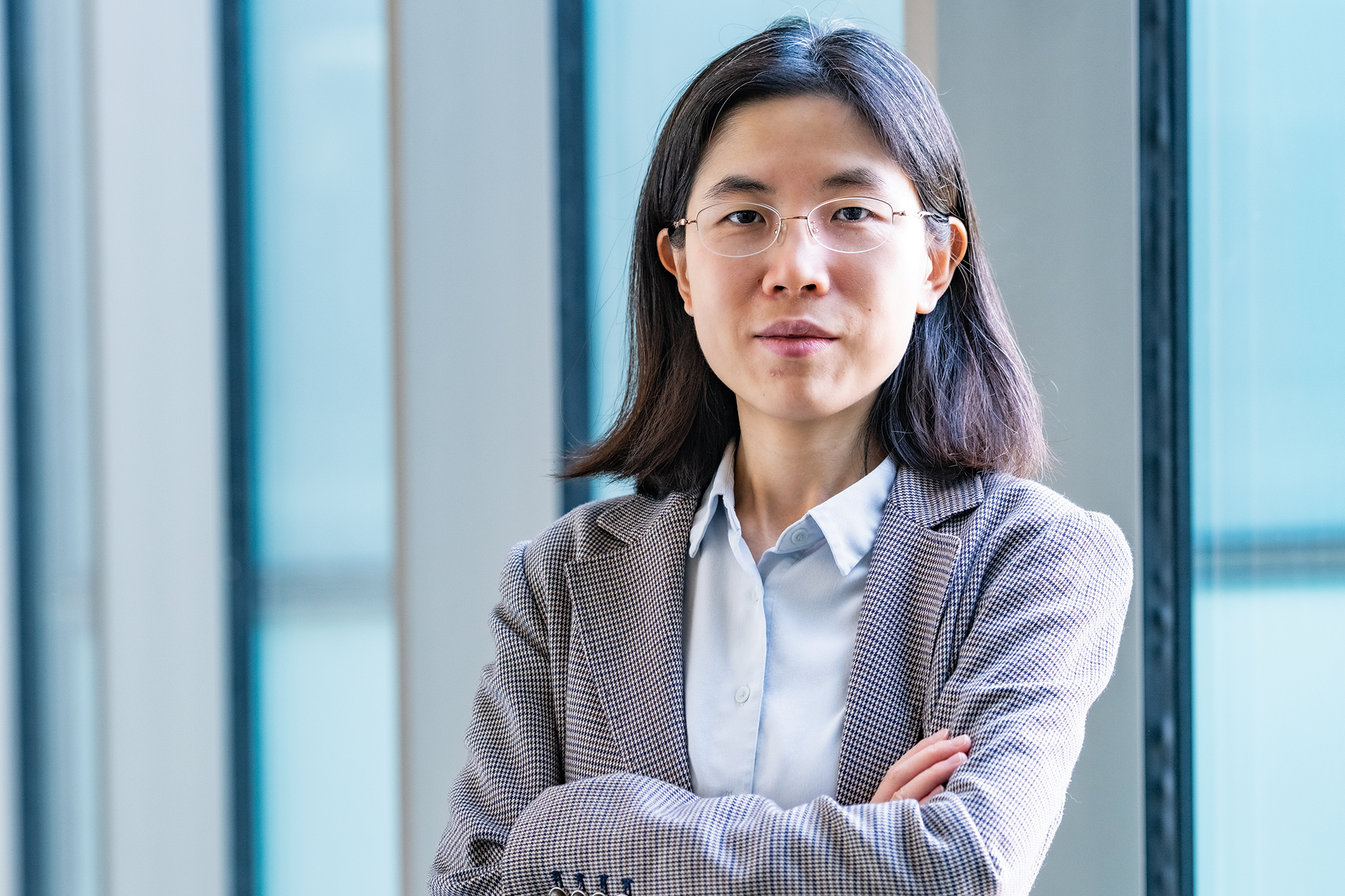
Pictured right: Shengxi Huang, associate professor of electrical and computer engineering and bioengineering at Rice
Private foundations are a powerful catalyst for research and innovation at Rice. In Fiscal Year 2025 alone, 22% of Rice’s total research expenditures were funded by foundation resources — underscoring the critical role these partnerships play in advancing academic excellence.
Since 1983, the W.M. Keck Foundation has donated more than $27 million to Rice, bolstering the university’s reputation as a global leader in research. Founded in 1954 by Superior Oil Company’s William Myron Keck, the Los Angeles-based foundation is one of the nation’s most respected supporters of pioneering research in science, engineering and medicine, as well as undergraduate education and community programs.
The foundation’s latest gift, a $1.2 million grant to advance super-resolution imaging and single-molecule tracking, underscores its long-standing mission to back high-risk, high-reward science. With the help of this essential funding, researchers are attempting to watch life unfold molecule by molecule — with cellular processes playing out in real time, and invisible worlds suddenly brought into view. At the heart of the project is a quantum property called super-radiance. When groups of molecules or nanomaterials emit light in perfect coordination, the result is an unusually bright and rapid burst of energy. While physicists have studied this phenomenon for decades, applying it to the challenge of molecular imaging is almost uncharted territory.
That challenge is where Shengxi Huang, associate professor of electrical and computer engineering, materials science and nanoengineering, and bioengineering at Rice, sees opportunity. Shengxi is leading a team of Rice and Texas A&M researchers who believe super-radiance could rewrite the rules of super-resolution imaging (SRI) and single-molecule tracking (SMT). These powerful techniques already let scientists study life at the nanoscale, but they face hard limits; sharper images mean slower speed, and faster speed means fuzzier images.
“Super-radiance offers a fundamentally new way to rethink imaging at the molecular level,” Shengxi says. “We aim to translate this quantum property into a powerful tool for imaging with potential applications in biology, chemistry, physics, engineering, etc.”
The team plans to engineer novel light-emitting compounds called fluorophores that achieve super-radiance by clustering fluorescent molecules or using carbon nanotube bundles. Unlike traditional fluorophores, these new designs could deliver both the clarity and speed researchers need. The result is imaging so precise and fast it may reveal cellular mechanisms as they happen.
With Keck’s support, Rice researchers are preparing to light up the invisible — and accelerate breakthroughs across fields such as cell biology, materials science and nanotechnology.
Accelerate the Vision
To learn more about how foundational support drives innovative, cross-disciplinary research, contact Ted Walker, director of foundation relations, at ted.walker@rice.edu or tkw1@rice.edu.
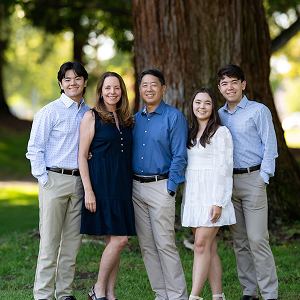
Rice parents Cheryl and Albert Cha support talented young scientists.
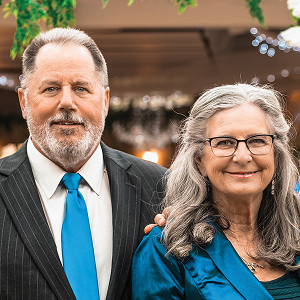
Bob Arnett’s ’79 lifelong commitment to discovery ignites curiosity.
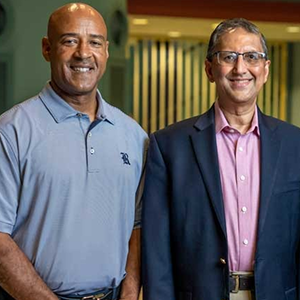
The Mehta Family Foundation is bringing India’s top students to Rice.
Giving to Rice
Development & Alumni Relations
P.O. BOX 1892
Houston, Texas 77251-1892
Phone: 713-348-4991
Email: giving@rice.edu