A Gift to Strengthen
Jewish Life at Rice
By Sophie Kid
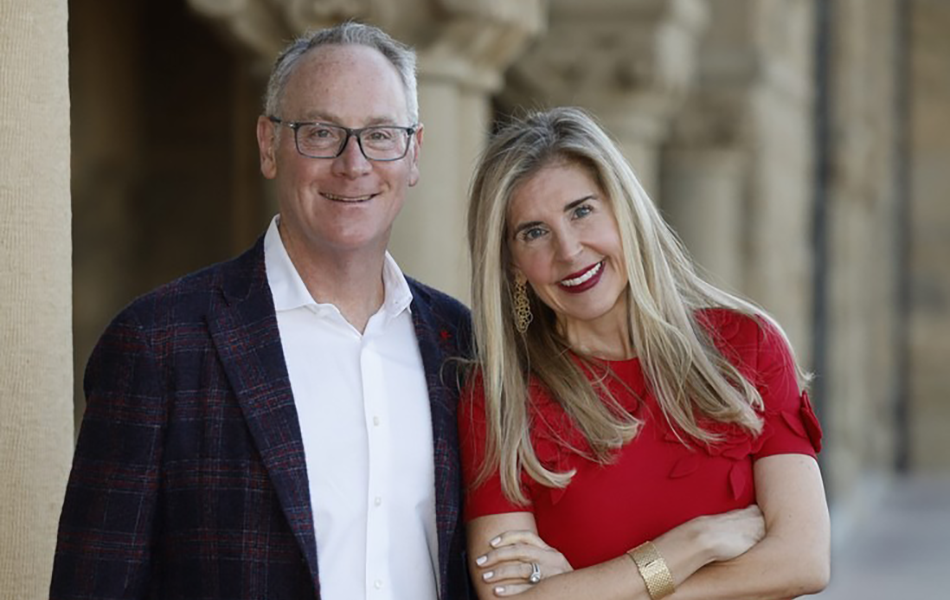
When alumna Jenna Christensen Fisher ’95 helped her son move into McMurtry College this fall, she officially stepped into a new role — Rice parent. Nearly 30 years after her own move-in day, she found herself reflecting on what defined her experience and what she hopes her son’s generation will carry forward.
Jenna came to Rice from Boston seeking a university that was rigorous, intimate, urban and warm. She found close relationships with faculty in the humanities and social sciences, lifelong friendships through the residential college system and a new connection to her Jewish faith.
“I had grown up fairly unreligious, but Professor Bill Martin's Sociology of Religion class and coursework gave me a new appreciation for how religion could be a force for good in society in a way that other institutions may not be as well-equipped to do,” Jenna said. “That class charted me on a course where I began to seek out opportunities to be a part of religion on campus.”
With the encouragement of mentors and professors, Jenna ultimately decided to study abroad at Hebrew University in Jerusalem, an experience she calls transformative.
“I think it was one of the best decisions I ever made,” she said.
Now, Jenna and her husband, Colin, are giving back in a way that reflects both gratitude and the realities students face today. The Fishers established a new fund to strengthen Jewish life at Rice, supporting campus programming, student initiatives and professional leadership, as well as study abroad opportunities in Israel.
“The fund is multidimensional,” Jenna explained. “It could support Shabbat dinners, educational and community programming, or additional professional support. We wanted to create something flexible that can grow and evolve as needs evolve.”
For Colin, who describes his connection to Rice as an “adopted affiliation,” the motivation is deeply personal.
“It’s a scary time for a lot of people,” he said. “Jews are on their heels over things that are largely outside of their control. If we can help create a sense of protection, comfort and belonging — that matters.”
The Fishers emphasize that their goal is not exclusivity but strengthening the campus community as a whole. At its core, the initiative is about ensuring students feel supported and confident expressing who they are.
“I want Rice to be a place where no one ever wonders whether there’s a vibrant Jewish community here,” Jenna said. “Where it’s simply understood that Rice welcomes and supports people of all backgrounds.”
Ultimately, the couple sees their gift as both an investment and an invitation.
“When your child goes to college, your job isn’t done,” Colin said. “You’re still part of that environment. And if you can help make it better — not just for your child, but for everyone — that’s incredibly meaningful.”
“Our hope is to light a spark,” Jenna added. “If others see this and think, ‘that resonates with me too,’ and decide to get involved, that’s success.”
Accelerate the Vision
Rice is committed to providing a world-class student experience grounded in connection, community and opportunity. Contact Andrea Sankey, director of development for student life, undergraduate education and graduate programs, at 713-348-4408 or andrea.sankey@rice.edu to learn more.
Jim Truchard Is
Engineering the Future
By Sophie Kidd
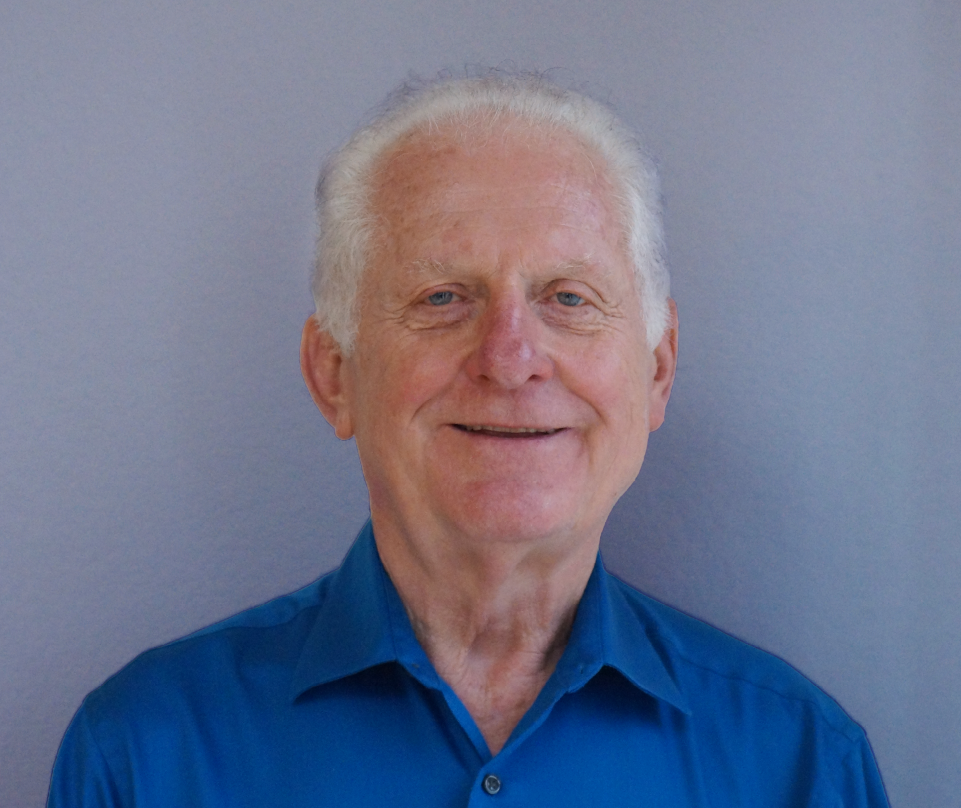
For Dr. Jim Truchard, investing in Rice engineering is more than philanthropy — it’s a continuation of a lifelong commitment to innovation. In 2022, he established two endowed chairs in electrical and computer engineering and computer science, strengthening Rice’s ability to recruit and support leading faculty in fields that are rapidly transforming society.
That forward-looking gift reflects a personal legacy shaped by curiosity, opportunity and an early connection to Rice — one that began in a high school physics classroom.
“I grew up on a farm without indoor plumbing and electricity,” he said. “One of my high school physics teachers was a Rice graduate.”
Though Jim did not attend Rice, that early influence sparked an interest in science and engineering that guided his path. He went on to earn a Ph.D. in electrical engineering and began his career at the University of Texas at Austin’s Applied Research Laboratories, where he worked on advanced measurement systems, including sonar for the U.S. Navy.
That work led to a pivotal insight: Engineers needed better tools to automate measurements and analyze data. In 1976, he co-founded National Instruments to address that challenge, helping pioneer technologies that transformed how scientists and engineers work. The company grew into a global leader serving industries from aerospace to communications.
Rice played a meaningful role in that success. Faculty members such as Sidney Burrus and Ken Kennedy contributed foundational expertise in signal processing and computer architecture, while generations of Rice graduates would bring critical skills in software, hardware and systems design.
This connection between academia and industry has shaped Jim’s approach to giving.
Over the years, he has supported Rice in multiple ways, with a focus on advancing engineering education and faculty excellence. His endowed chairs build on that commitment, providing lasting support to attract leading scholars, expand research and create opportunities for students.
“Providing opportunity for the next generation is essential,” he said.
For Jim, that investment is especially important as engineering and computer science continue to evolve rapidly.
“Rice is one of Texas’ leading technical universities,” he said. “It is very important for the Texas economy and the future of Texas, as well as the U.S.”
Through his philanthropy, Jim is helping ensure that Rice continues to cultivate innovation at the highest level — supporting faculty who mentor students, advance discovery and prepare graduates to tackle complex challenges.
“Rice helped shape my work,” he said. “We want to continue to find ways to help wherever we can.”
“Rice helped shape my work. We want to continue to find ways to help wherever we can.”
Accelerate the Vision
Invest in Rice students and faculty leading the future of engineering and computing. Contact Cynthia Riley, director of development, engineering and computing, at 713-348-7347 or cynthia.c.riley@rice.edu.
From First Gift to
Lasting Impact
By Jenny Rozelle ’00
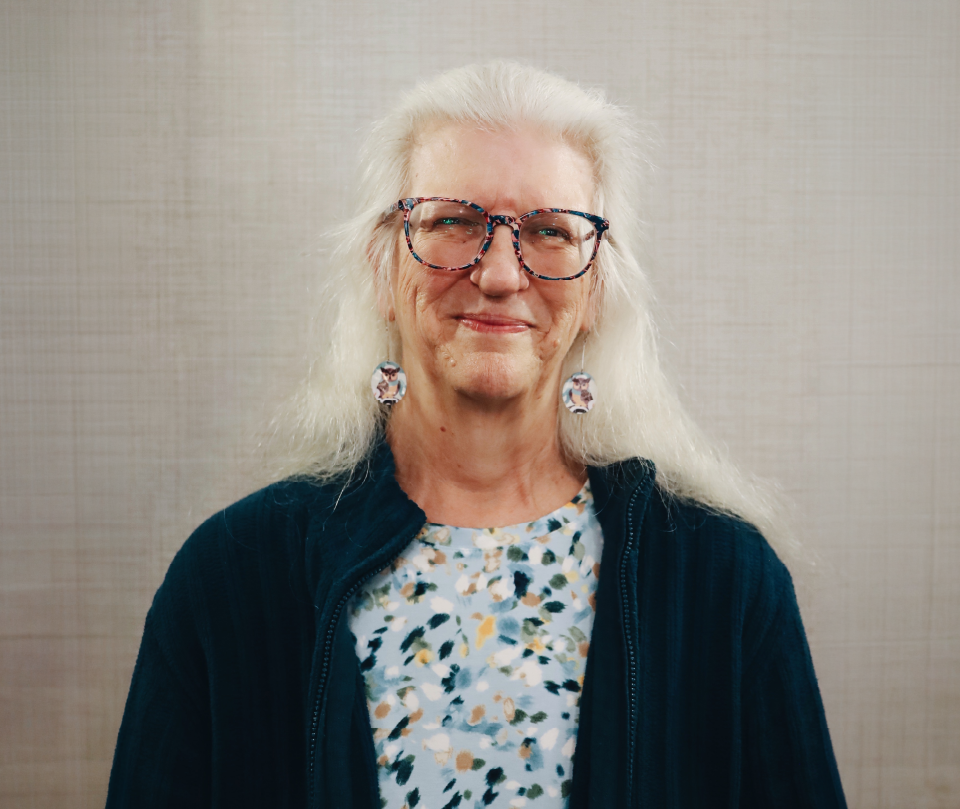
Within her high school graduating class of nearly 900 seniors, including 12 National Merit Scholars, in Richardson, Texas, Rice University was considered the gold standard, said Lavelle Fritz Ferris ’82. “If you were smart, you went to Rice.” When she arrived on campus, she found not only academic rigor but also a community where she truly belonged. “It’s where I found my people,” she said.
Although she majored in chemical engineering, Lavelle eagerly explored disciplines far beyond her field. “One of the things I loved about Rice was the ability to take any class I wanted, if I had the time. I took Professor Kolenda’s philosophy class; I took Professor Brody’s class on atheism,” she said. “As an engineer, if I had gone to another university, I never would have been exposed to that material.”
Lavelle also embraced the social and residential life at Will Rice College. She was a rider in Beer Bike and served as bike captain for two years. Although she was not a “huge athlete,” Lavelle also competed in intramural sports for fun. “I did as much as I could. College was an experience.”
A culture of giving took root early in her alumni years. When she graduated, the Brown Foundation offered a four-to-one match for donations from young alumni. “That match got me started as a donor,” Lavelle said. Rohm and Haas, where she worked as a chemical engineer, also matched donations. Her contribution was multiplied on a grand scale, and that philanthropic habit has continued ever since.
In 2000, Lavelle helped to fund the Jeanne Carroll Arnold Scholarship Fund in memory of her Will Rice roommate, Jeanne Carroll Arnold ’82. Lavelle continues to add to the scholarship and promotes it to classmates.
Lavelle’s commitment to the Rice community has remained strong. She volunteered enthusiastically with the Rice Alumni Volunteers for Admissions, even during the four years she lived in Singapore, and co‑chaired her class’s reunion giving committee. “Rice people are great people,” she said. “When you meet a Rice person in the wild, you almost always feel like you can chat.”
After leaving Rohm and Haas and while raising twin boys, Lavelle became a math and science teacher at Gatesville High School. Working closely with students reinforced her belief that financial barriers should never limit a young person’s potential.
“I don’t want any kid to say, ‘I got into Rice, but I couldn’t afford it.’ That would break my heart.”
So, in 2025, she and her husband, Lonnie, created the Lavelle Fritz Ferris Endowed Scholarship.
“Every gift matters,” said Lavelle. “I wanted to do my part to support The Rice Investment to help ensure a Rice education remains accessible to every student, regardless of their background.”
“Every gift matters. I wanted to do my part to support The Rice Investment to help ensure a Rice education remains accessible to every student, regardless of their background.”
Accelerate the Vision
To learn how you can support Rice students, contact Kade Smith, director of development at 713-348-5344 or kade.i.smith@rice.edu.
Small Towns Receive Big
Attention From Rice Alumnus
By Jenny Rozelle ’00
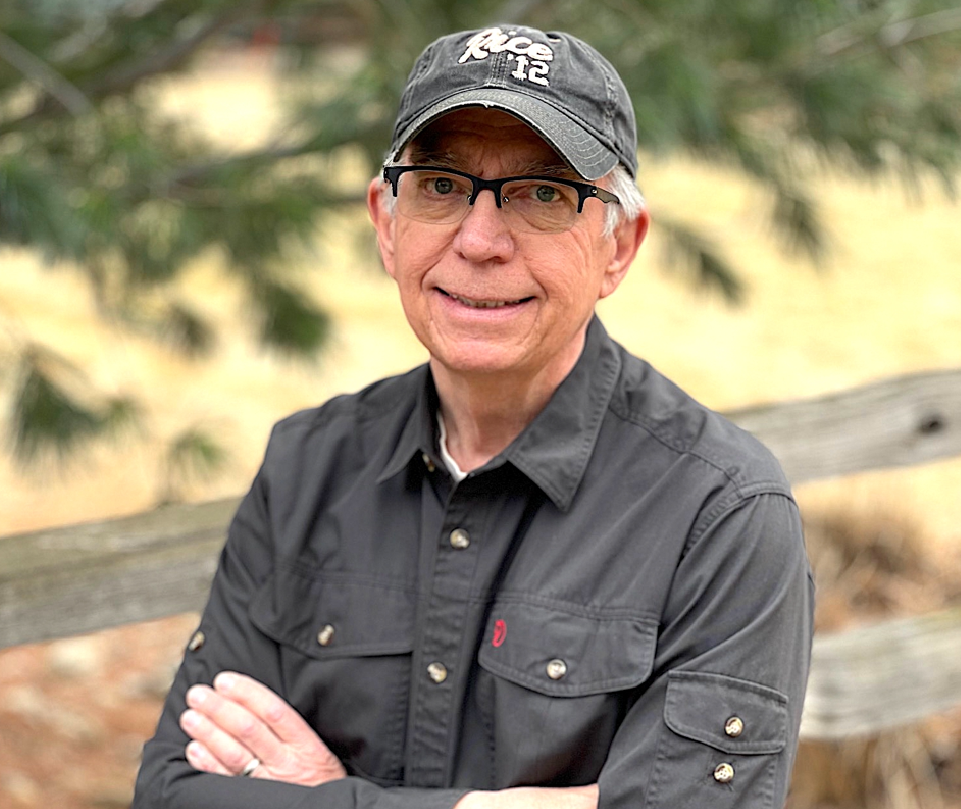
Small-town life was the norm for Jim Prugh ’77, ’78 long before he arrived at Rice as a freshman. Jim grew up along the shore of a spring-fed lake in southeast Wisconsin, spending summers racing sailboats with his brother and walking to school — no matter the weather. During his early high school years, his family moved to a ranch in Wyoming, where he soon found himself herding cattle on horseback and mending miles of barbed wire fence. Through each move and new experience, Jim discovered that he loved both living and learning in small-town communities.
After developing an interest in chemical engineering, Jim applied to universities with strong engineering programs. “I liked Rice’s application process. It wasn’t just filling in some blanks. I had to express myself,” he said. “Somehow, I managed to earn my degree in four years. I still don’t know how I did that, especially against the competition. But I learned at Rice, if other people have done something before, it can’t be that hard. I shouldn’t be afraid to do it too.”
Upon graduation, he began working with Phillips Petroleum. The proverbial carrot offered included an assignment in Norway, which ultimately extended to more than four years overseas. He traveled extensively in Europe and Africa during that time. After he returned to the U.S., Jim continued working as an engineer at Phillips Petroleum and later KN Energy.
Over 20 years ago, Jim and his wife, Diane Fatheree, stumbled upon Lindsborg, Kansas, a small town that calls itself “Little Sweden, USA.” Soon Jim purchased buildings along its Main Street and engaged in historic preservation.
Around that same time, Jim pondered, “I got into Rice from a very small town with an even smaller graduating class. Other students should have that opportunity too.” This thought led him to establish the Rice University Remote Area of Learning, or R.U.R.A.L., Scholarship in 2001. “I view Rice itself as a small town — a close-knit, vibrant community full of wonderful people who are individual in their own way, which is what small towns are all about.” Now, 25 years later, he is working with Rice’s Development and Alumni Relations office to expand his donation and hopes to reach more students.
“With my experiences and education at Rice, I learned to jump into the unknown — from living and traveling overseas to historic preservation in Lindsborg,” Jim declared. “I’m confident that Rice will ensure that the R.U.R.A.L. Scholarship will assist many small-town students like me.”
Accelerate the Vision
To learn how you can support Rice students, contact Kade Smith, director of development at 713-348-5344 or kade.i.smith@rice.edu.
Explore More From Our Current Issue
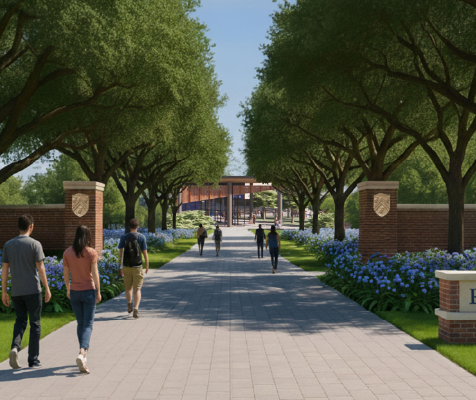
A once- in- a-generation opportunity to elevate the campus experience and deepen the university’s relationship with its surrounding community.
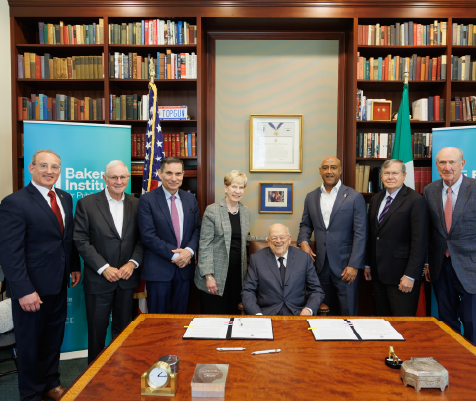
For generations, the relationship between the United States and Mexico has shaped economies, communities and daily life across both nations.

A transformational $55 million grant from Kinder Foundation will empower Rice University’s Kinder Institute for Urban Research for decades to come.
Giving to Rice
Development & Alumni Relations
P.O. BOX 1892
Houston, Texas 77251-1892
Phone: 713-348-4991
Email: giving@rice.edu