The Gateway Project
A Transformative Vision for Rice’s Campus
Renderings courtesy of SWA Group
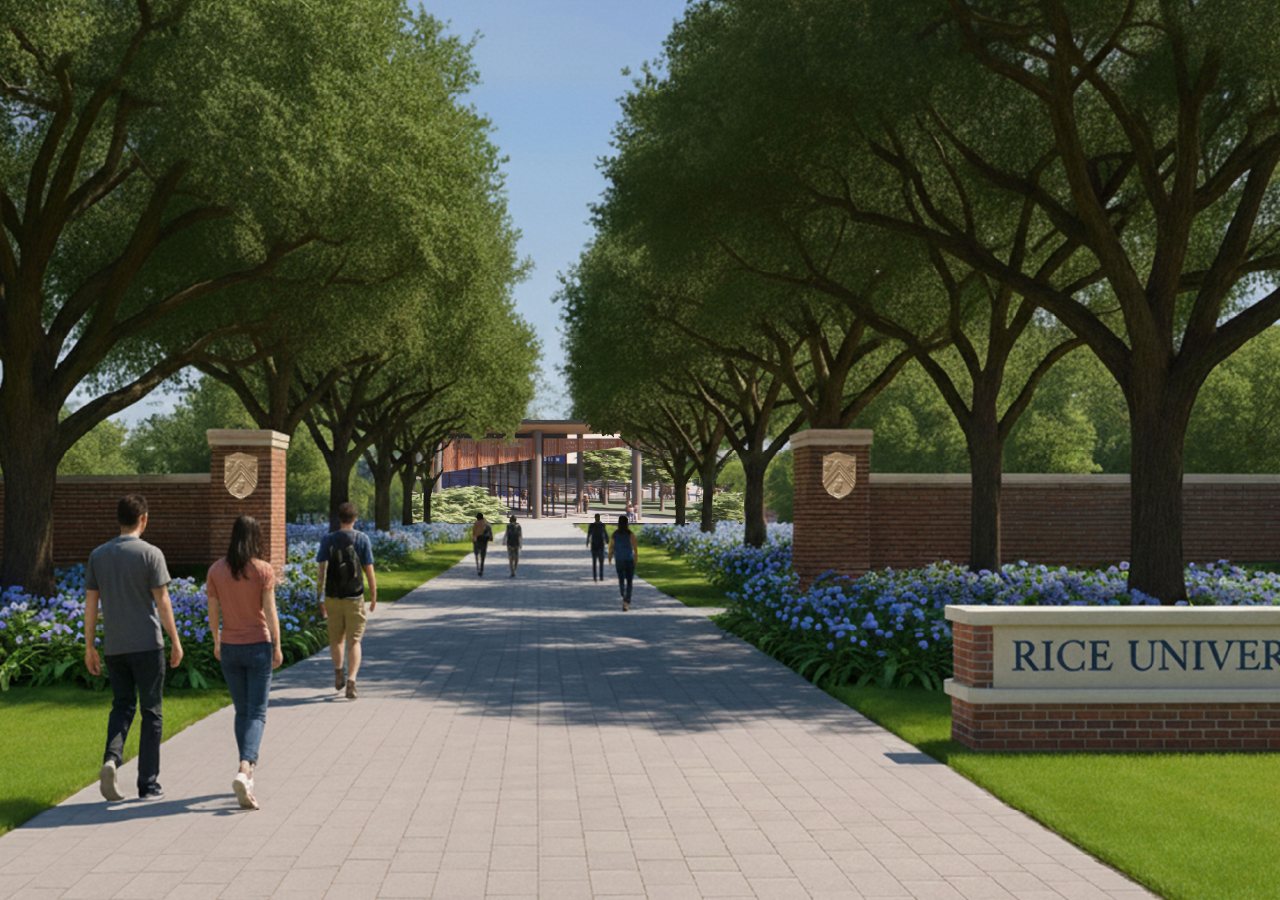
Pictured above: Gateway entrance to campus from Greenbrair Amherst
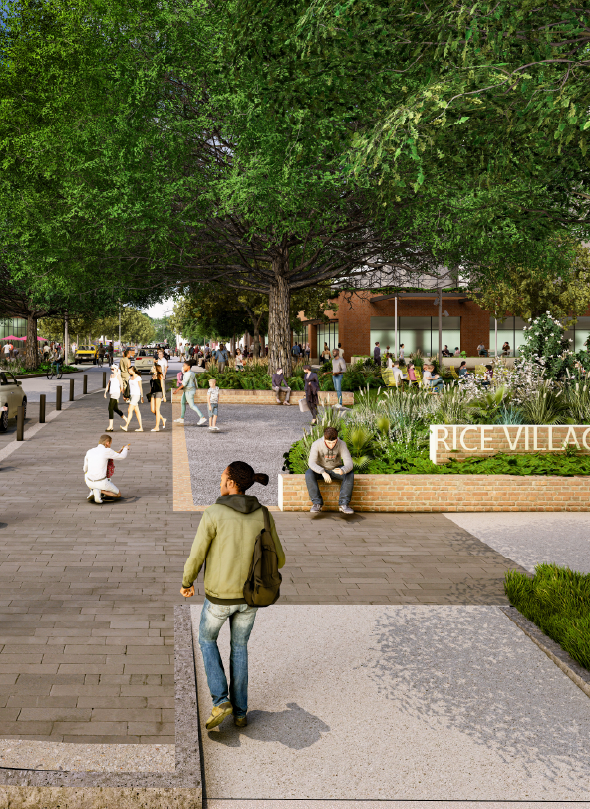
For more than a century, Rice University has grown in step with Houston. With the Gateway Project, the university now invites supporters, neighbors and partners to help shape a welcoming new front door on the west side of campus, one that creates a vibrant, pedestrian-friendly link between Rice and the heart of Rice Village. The project reflects a commitment to connection, bringing campus, community and culture together through shared spaces, thoughtful design and revitalized landmarks. Anchored in Rice’s 30-year Campus Land Use Plan, the $120 million investment represents a once- in- a-generation opportunity to elevate the campus experience and deepen the university’s relationship with its surrounding community.
At the center of the project is a new pedestrian-oriented street that will extend Amherst Avenue two blocks east from Morningside Drive to a new entrance at Greenbriar Drive. This welcoming corridor will transform currently underutilized land into an active, walkable gateway lined with trees, lighting and green space . Designed to support a dynamic mix of uses — including retail, multifamily housing, restaurants and a grocery store — the new district will become a lively extension of campus life. A planned public green space will offer opportunities for performances, community gatherings and student events.
“By connecting our campus directly to Rice Village, we are strengthening our ties to Houston while enriching the student experience,” said Rice President Reginald DesRoches. “This project reflects Rice’s commitment to innovation, growth and community.”
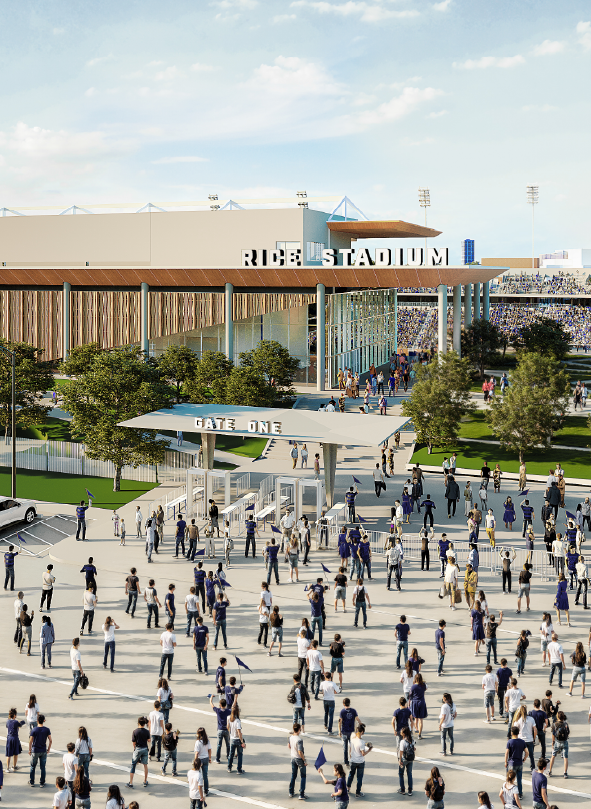
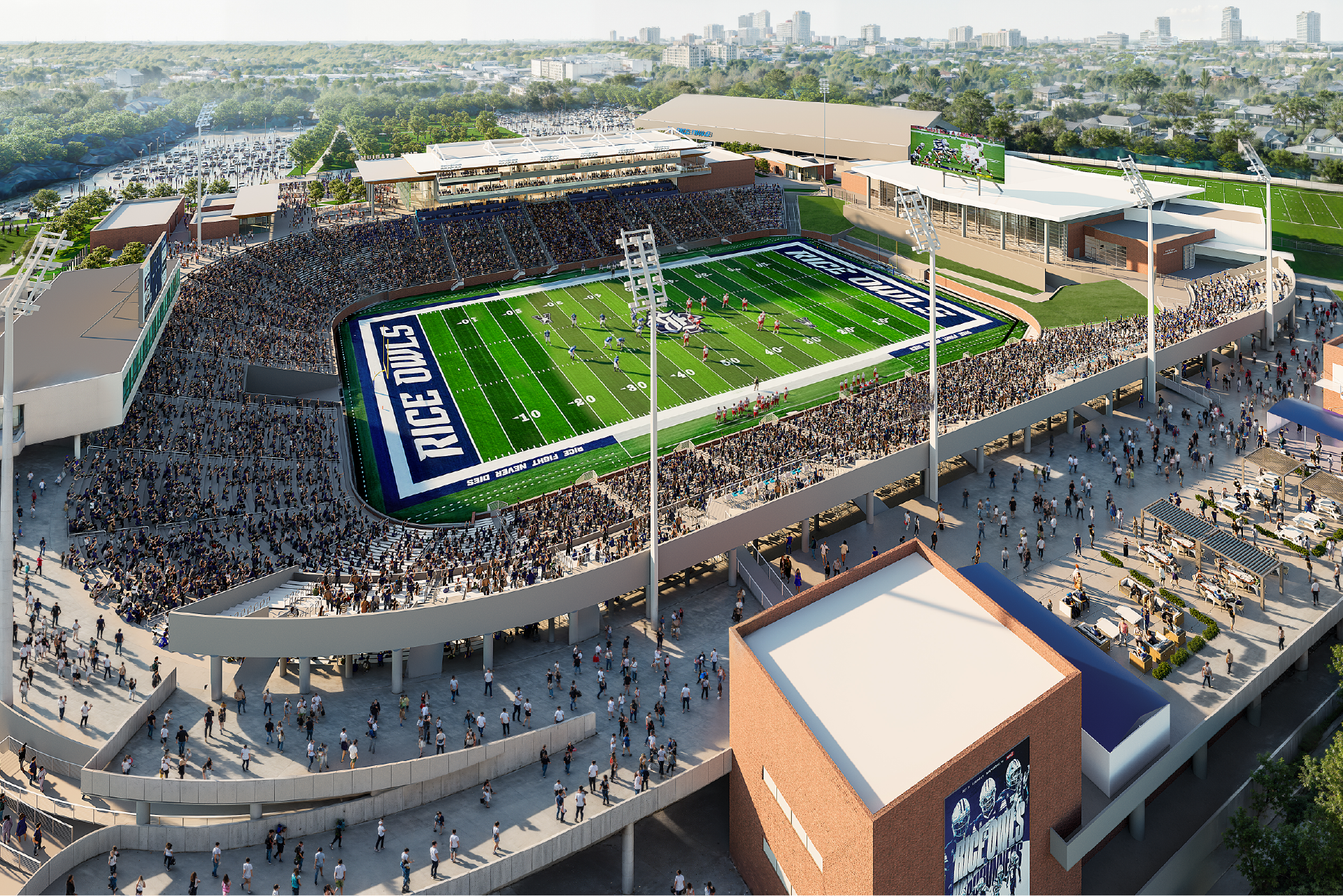
A cornerstone of the Gateway Project is the complete reimagining of Rice Stadium. The iconic 75- year-old venue that was home to President John F. Kennedy’s “We choose to go to the moon” speech and countless athletic milestones will be transformed into a modern “stadium in a park.” Led by global design firm Populous in conjunction with Nations Group, the renovation will elevate the fan and student athlete experience while creating new opportunities for events that bring the community together.
Plans include a new three-level west concourse with premium club seating, flexible conference and banquet areas for up to 600 seated guests, 14 private suites, upgraded media and operations spaces, and a dramatic shade canopy that improves comfort and efficiency. Additional improvements include a 360-degree concourse, expanded restrooms and concessions, an upgraded commissary and redesigned entry plazas connecting the stadium seamlessly to Rice Village. Stadium capacity will be reduced from 47,000 to just over 30,000, creating an energetic atmosphere and enabling more non-football events.
Beyond the stadium, redevelopment will include new green space, a redesigned pedestrian pathway and sustainable landscaping that manages stormwater naturally. These efforts support the university’s long-term commitment to environmental stewardship and community-centered design.
For supporters and partners, the Gateway Project presents a powerful opportunity: to help shape a more connected, accessible and vibrant Rice — one that honors its history while building boldly for the future.

AN ICON
REIMAGINED
At 75 years old, Rice Stadium is no stranger to the global stage. It first made history in 1962 when President John F. Kennedy delivered his iconic address setting America’s sights on the moon. The stadium then served as home to the Houston Oilers for three seasons beginning in 1965, went on to host Super Bowl VIII in 1974, and welcomed legendary concerts by Pink Floyd and the Eagles in 1994.
Now, Rice Stadium’s transformation introduces exceptional new spaces — and once-in-a-lifetime naming opportunities — for supporters who want to leave a visible mark on Rice, its students and the city of Houston.
THE NEXT CHAPTER BEGINS
- Approximately 30,000 seats will replace the former 47,000-seat configuration, prioritizing proximity, comfort and atmosphere.
- A new three-level concourse building will replace the former press box and upper seating, introducing premium club seating, a flexible event space for 600-1,000 guests, 14 private suites, and media and broadcast areas.
- Two new concession buildings will be anchored at the southwest and northwest corners of the stadium.
- A more intimate gameday experience will be created by removing roughly two-thirds of the east upper deck, opening sightlines and bringing fans closer to the action.
- A new practice complex will rise at the northwest corner of the site.
- The Southwest Plaza will connect Rice Stadium directly to Rice Village through landscaped pedestrian pathways.
Accelerate the Vision
To learn more about ways to support the Gateway Project, contact Mike McBride, senior associate athletic director of development, at 713-348-8425 or michael.mcbride@rice.edu.
Explore More From Our Current Issue

Lavelle Fritz Ferris ’82 has built a lifelong legacy of philanthropy.

Discover how creativity sparks connection, shapes cognition and supports well-being.
Learn more about how the Baker Institute is strengthening economic opportunity and progress across borders.
Giving to Rice
Development & Alumni Relations
P.O. BOX 1892
Houston, Texas 77251-1892
Phone: 713-348-4991
Email: giving@rice.edu