The New Pulse of Medicine
Inside Rice’s Digital Health Initiative
By Sarah Brenner Jones
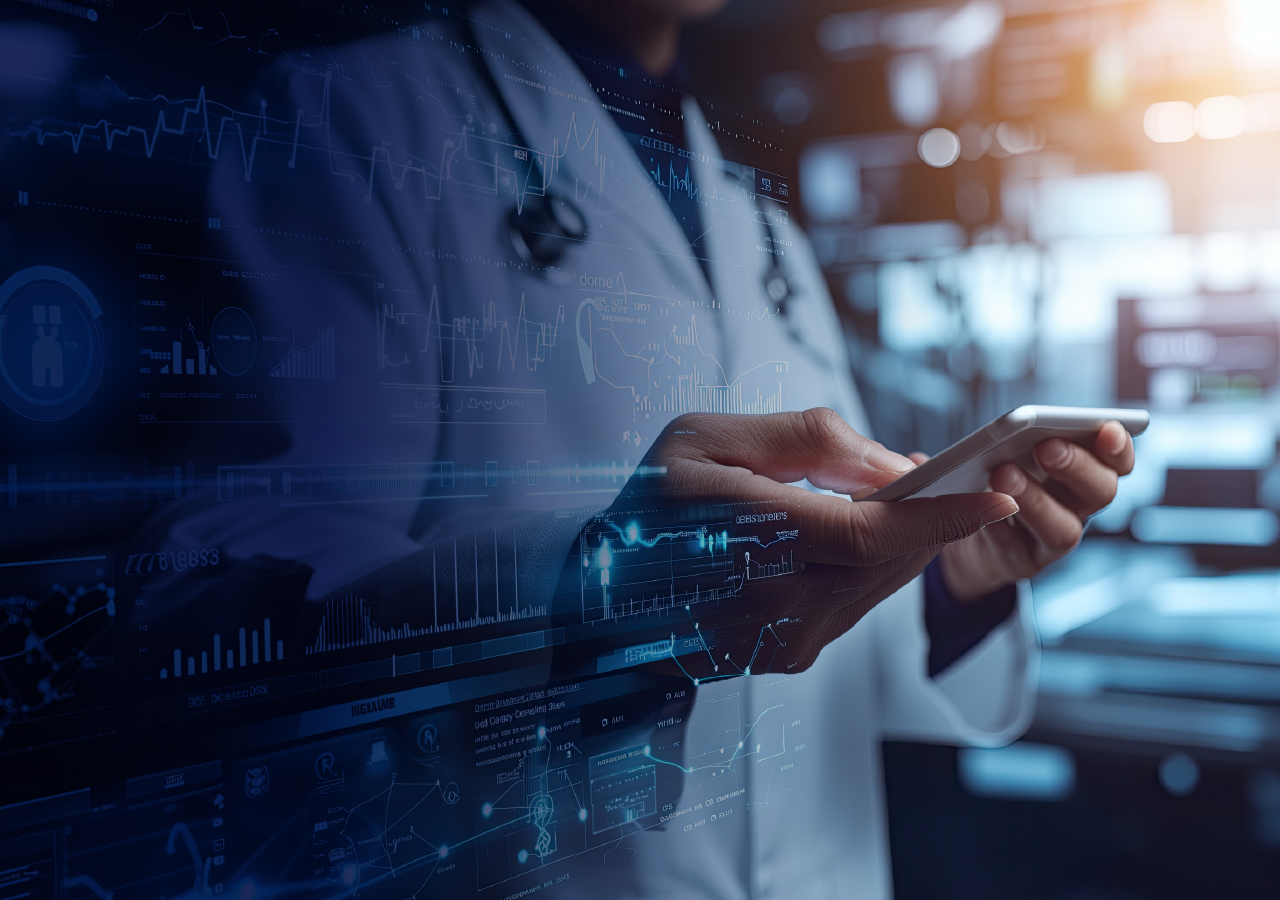
Every day, health care systems around the world generate billions of data points — from electronic health records and genomic profiles to imaging scans, wearable sensors and even environmental monitors. Hidden within this vast digital ecosystem are insights that could fundamentally reshape human health. Never before have we had the ability to transform such complex, multifaceted data into intelligence that can predict disease, personalize prevention and expand access to high-quality care.
Digital health represents a shift not only in technology, but in perspective. Instead of relying solely on measurements taken during occasional clinic visits, digital health brings care into everyday life — through wearable devices, smartphones and at-home monitoring tools that continuously capture real-time information. These technologies make health visible between appointments, offering an ongoing view of wellness rather than isolated snapshots.
But devices are only half the story. The other half is intelligence.
Advanced analytics and artificial intelligence translate raw data into insights clinicians can actually use. Sitting between the patient and the physician is an analytical layer that organizes information, highlights meaningful changes and supports more informed, personalized decisions. This convergence of data, computation and care is at the heart of Rice University’s Digital Health Initiative.
Led by Ashutosh Sabharwal, the Ernest Dell Butcher Professor of Engineering, Rice’s Digital Health Initiative (DHI) brings together engineers, behavioral scientists, clinicians and data scientists to harness the power of AI, biomedical engineering and integrated data systems to move discoveries beyond the lab and into practical use. That impact is amplified through Rice’s partnership with Houston Methodist via the Houston Methodist-Rice Digital Health Institute, a joint effort designed to accelerate the translation of academic research into clinical practice. By combining Rice’s strengths in engineering and data science with Houston Methodist’s clinical expertise and patient reach, the institute creates a pathway for testing, refining and deploying digital health innovations in real-world care settings.
“The program brings together a pool of remarkably talented scientists to create health solutions that are accessible to all patients, regardless of their income or where they live,” Ashu said.
AI and Mental Health
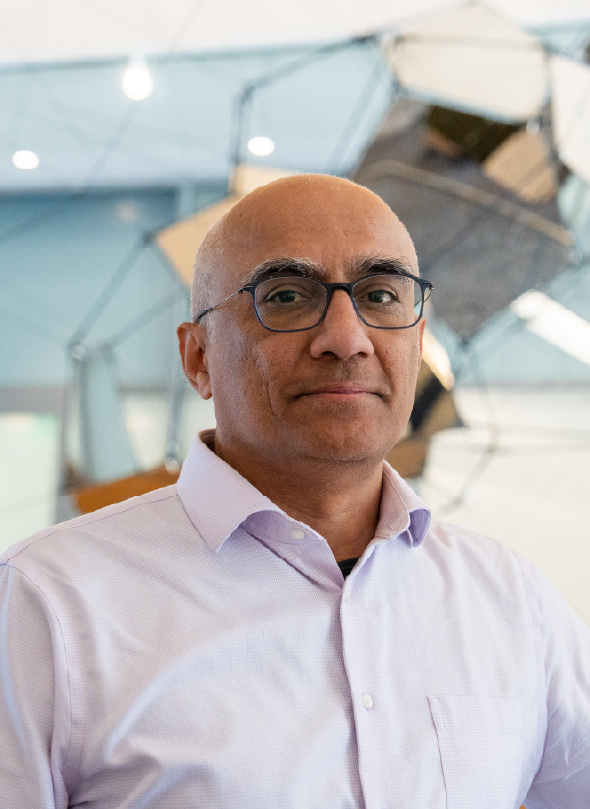
Ashutosh Sabharwal, the Ernest Dell Butcher Professor of Engineering Ashu’s startup, Cognita Labs, has developed two FDA-approved pulmonary care devices for asthma and COPD now in use across 20 countries. Photo by Alan Nguyen
Ashu’s own research focuses on one of medicine’s most elusive frontiers: mental health. “Mental health diagnoses are still almost entirely symptom based,” he said. “Our question has been: What measurable dimensions of behavior can help us understand a person’s mental health?”
In one significant project, Ashu’s team is working to quantify sociability, the degree to which people engage with others, a key indicator in many mental health conditions. Although clinicians have long recognized its importance, sociability has traditionally been measured through self-reporting or caregiver observations, both of which can be subjective and unreliable.
Ashu’s team is developing advanced analytics to pair with a privacy-preserving listening device. With patient consent, the system analyzes daily audio data to estimate how many distinct people an individual interacts with, how often those interactions occur and how actively the person participates. Crucially, the models do not identify individuals or analyze spoken content, protecting privacy while still capturing meaningful behavioral patterns.
This approach allows clinicians to move beyond episodic assessments toward a dynamic, real-world understanding of patients’ lives. The technology is already being deployed in clinical studies, including Parkinson’s disease trials and research on substance use disorder and schizophrenia. The result is richer data, earlier detection of behavioral change and new pathways to personalized, timely intervention.
From Algorithms to Surgical Skill
Marcia O’Malley, the Thomas Michael Panos Family Professor in Mechanical Engineering, has spent years turning academic research into real-world medical impact through a long‑standing collaboration with Simbionix, a third-party, medical simulation company now part of Surgical Science. The partnership began with a simple question: Can surgical skill be objectively measured?
Working alongside an endovascular surgeon at Houston Methodist, Marcia and her team set out to improve the way surgeons are evaluated and trained. They first developed techniques to analyze how trainees manipulated guidewires and catheters through a physical vascular model constructed from plastic tubing. By carefully tracking how these tools moved, using sensors and video analysis, the researchers found clear patterns that reliably differentiated expert surgeons from novices.
As Simbionix evolved its simulators from physical prototypes to digital CAD models of human vasculature, Marcia’s research found a natural home. Her lab’s algorithms, designed to evaluate surgical performance based on movement, were built directly into the company’s software. Licensed from the university and integrated into Simbionix’s commercial training platform, her code now helps surgeons receive precise, objective feedback as they learn, bringing cutting-edge research directly into training programs around the world.
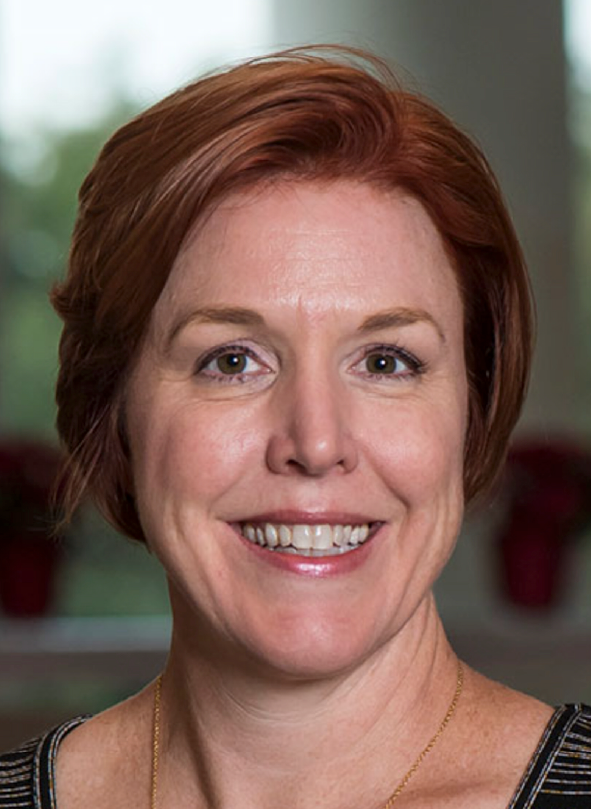
Marcia O’Malley, the Thomas Michael Panos Family Professor in Mechanical Engineering
Since 2012, multiple master’s and doctoral students in Marcia’s lab have contributed to this research, often working alongside Houston Methodist surgical residents and attending surgeons. With support from the National Science Foundation, the team has advanced beyond objective skill assessment to explore novel approaches that deliver real-time performance feedback through wearable haptic devices — technologies designed to accelerate skill acquisition. Together, this sustained collaboration has laid the groundwork for both scientific breakthroughs and the commercial tools now used to assess and improve surgical training globally.
Digital Health Takes On Glaucoma
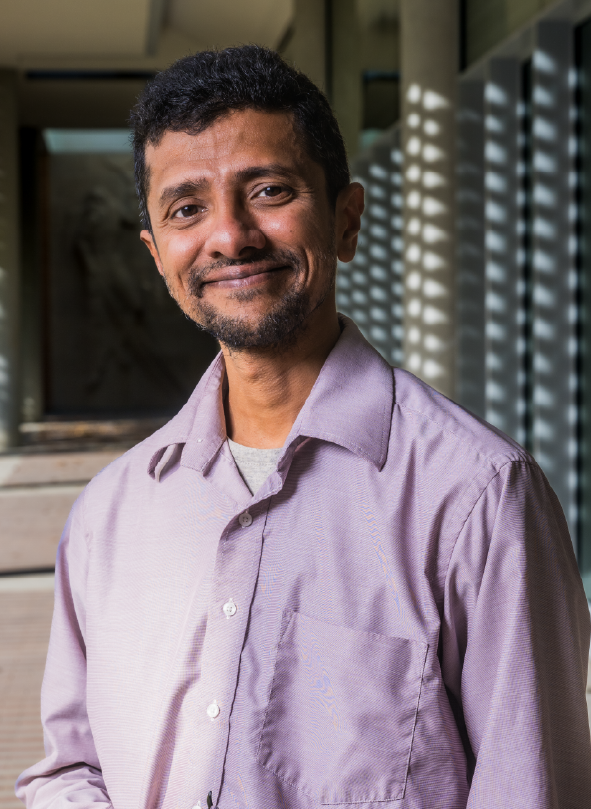
Ashok Veeraraghavan, department chair and professor of electrical and computer engineering. Photo by Jeff Fitlow
Ashok Veeraraghavan, professor and chair of electrical and computer engineering, believes health care will soon be fundamentally shaped by continuous sensing and data-rich systems. “The monitoring device is the first piece,” he explained. “The second is using AI to translate that continuous stream of information into insights a clinician can act on.”
A striking example of this vision emerged from Ashok’s lab. Jessie Adams, then a Ph.D. student, began developing an ultraminiature camera for endoscopy. During the project, Jessie met ophthalmic surgeons seeking better imaging tools for glaucoma surgeries — some of the most intricate procedures in medicine. Only a small fraction of ophthalmic surgeons perform these surgeries today, largely because existing tools do not provide adequate 3D visualization or facilitate efficient procedures. Jessie recognized that his camera technology could help overcome these limitations. What began as a research project evolved into Synopic, a startup built around an extremely small single-camera system that captures stereoscopic views and delivers real-time, 3D surgical guidance.
Synopic’s technology improves targeting, navigation and efficiency, making complex glaucoma procedures safer and more accessible, an example of how digital health can democratize specialized care.
How Philanthropy Can Bridge the Gap Between Discovery and Impact
For technologies like these, the greatest barrier to progress is often not scientific — it is financial. Many promising technologies stall in the space between academic discovery and real-world adoption because few researchers have the time or funding to pursue full-time commercialization.
Jessie Adam’s ultraminiature camera benefited from an external fellowship that provided two years of dedicated salary and support — time essential for refining prototypes and testing clinical efficacy and value. But Ashok notes that many inventions are not so fortunate. “There’s a gap between a market need and a promising piece of university technology,” he explained. “Crossing that gap takes two to three years of focused work from someone whose goal is impact, not publication.”
This is where philanthropy can be transformative.
Strategic philanthropic investment in postdoctoral researchers and translational fellows provides the expertise, continuity and flexibility needed to advance ideas from lab to market, where they can measurably affect people’s lives. These researchers have the technical depth, entrepreneurial mindset and clinical partnerships to advance discoveries toward deployment — but only if they have the freedom to focus on development.
By supporting these critical roles, donors help ensure that innovations in digital health do not remain confined to academic journals, but reach patients, clinicians and communities—where they can truly change lives.
Accelerate the Vision
Moving digital health technology from the lab to the clinic requires focused funding for talented students and postdoctoral researchers. To support digital health at Rice, contact Cynthia Riley, senior director of development in egnineering at 713-348-7347 or cynthia.c.riley@rice.edu.
Explore More From Our Current Issue
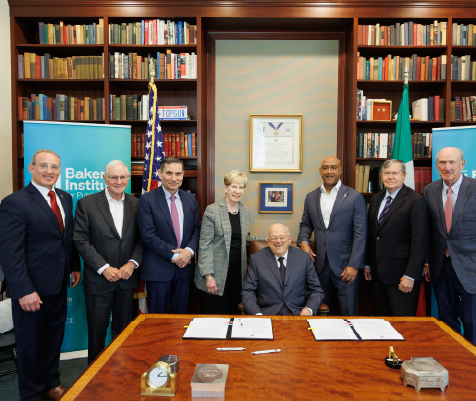
How the Baker Institute is strengthening economic opportunity and progress across borders.
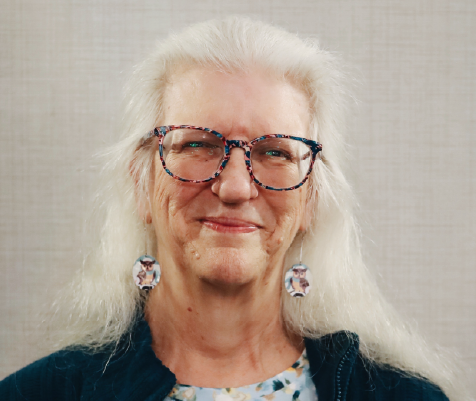
Lavelle Fritz Ferris ’82 has built a lifelong legacy of philanthropy.
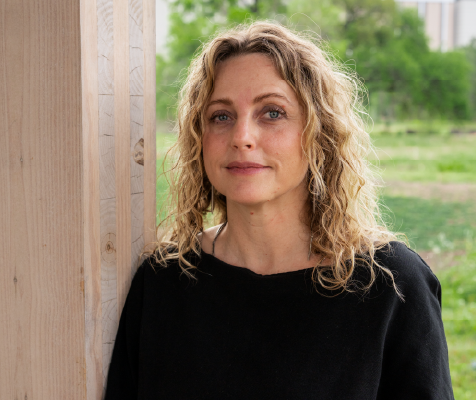
Rice’s new MFA in Creative Writing is rooted in Houston and the Gulf Coast.
Giving to Rice
Development & Alumni Relations
P.O. BOX 1892
Houston, Texas 77251-1892
Phone: 713-348-4991
Email: giving@rice.edu