Inside the Creative Mind
By Kara Timberlake
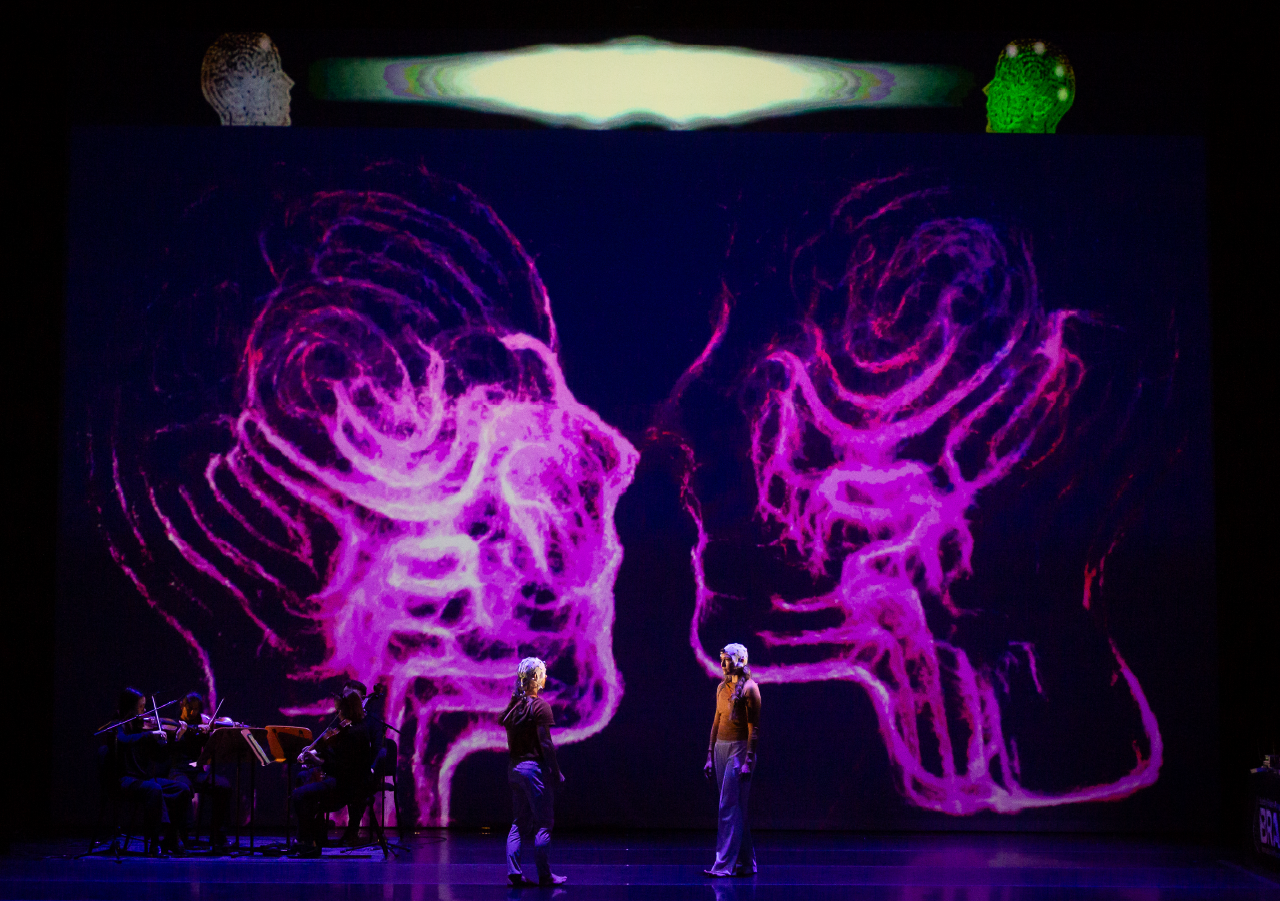
Pictured above: A scene of "Meeting of Minds." The brain synchrony meter at the top shows high neural alignment between the two dancers. Photo by Lynn Lane
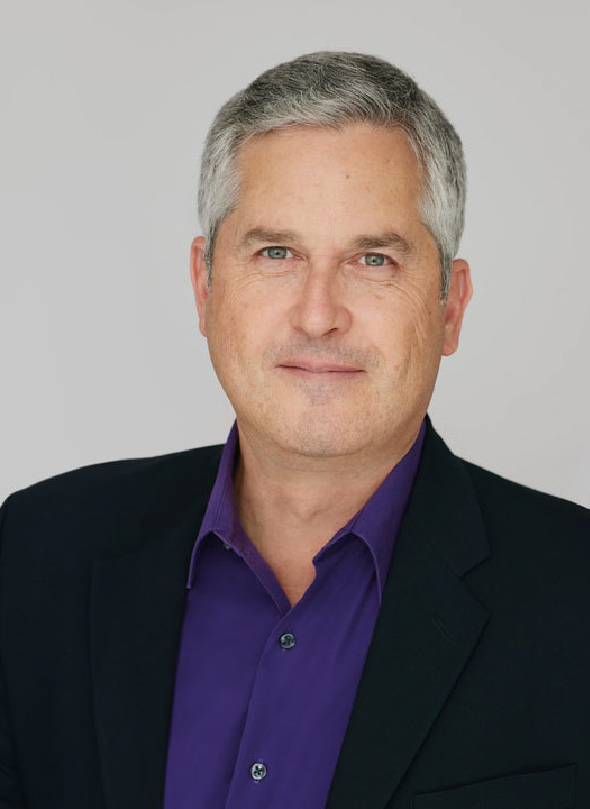
Anthony Brandt
Photo by Claire McAdams
The stage hums with energy. Dancers move in sync, their bodies flowing and sweeping with intensity, while musicians weave a live score around them.
Above, twin screens glow with images of brains, specks of light pulsing and flickering, a visual heartbeat of connection. A “brain synchrony meter” rises and falls in real time, tracking how closely two minds align.
This is “Meeting of Minds,” a live performance and experiment that captures how people quite literally get “on the same wavelength.”
At the center of it is Anthony Brandt, a composer and professor at Rice University’s Shepherd School of Music. Anthony’s work sits at the intersection of music, neuroscience and human behavior. For over a decade, he has explored the question: “How can the arts help us better understand how the brain works?"
In “Meeting of Minds,” that question becomes tangible. Using mobile EEG technology, Anthony and his collaborators recorded brain activity as dancers moved through choreography built on conflict and cooperation. Eye contact, touch and synchronized movement — three key indicators of connection — were deliberately emphasized. At the same time, a score for live and prerecorded string quartets unfolded, representing two brains in dialogue.
Because the music followed a fixed structure, researchers could compare brain activity at precise moments across performances. As the dancers rehearsed and performed, the synchrony meter projected above them revealed their evolving neural alignment, offering a rare glimpse into how trust, empathy and coordination take shape in real time.
The project has traveled internationally, with performances at the United Nations “AI for Good Summit” in Geneva and the MARCO museum in Monterrey, Mexico. But beyond its global reach, “Meeting of Minds” points to something more fundamental: creativity is not just an abstract idea — it is measurable, observable and deeply social.
Studying creativity has long posed a challenge. Traditional neuroscience methods favor tightly controlled lab environments, prioritizing precision while stripping away context, emotion and interaction: the very conditions where creativity thrives.
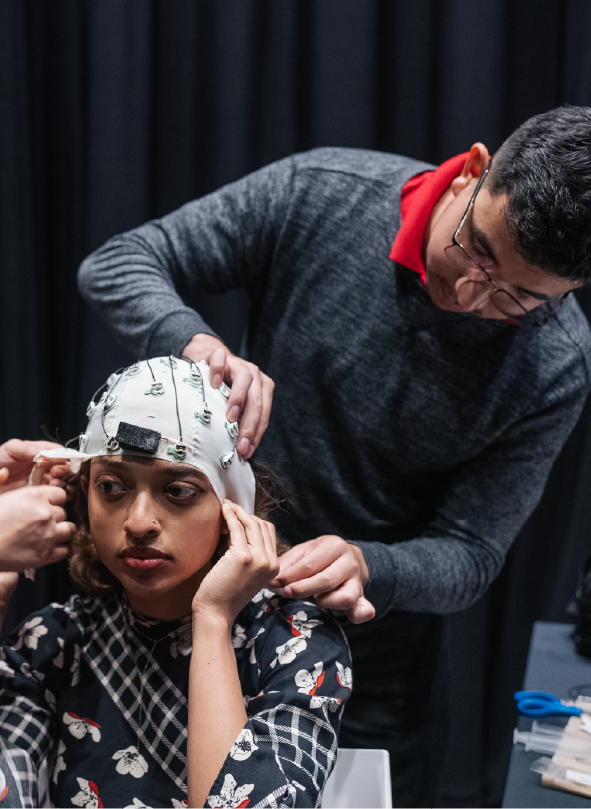
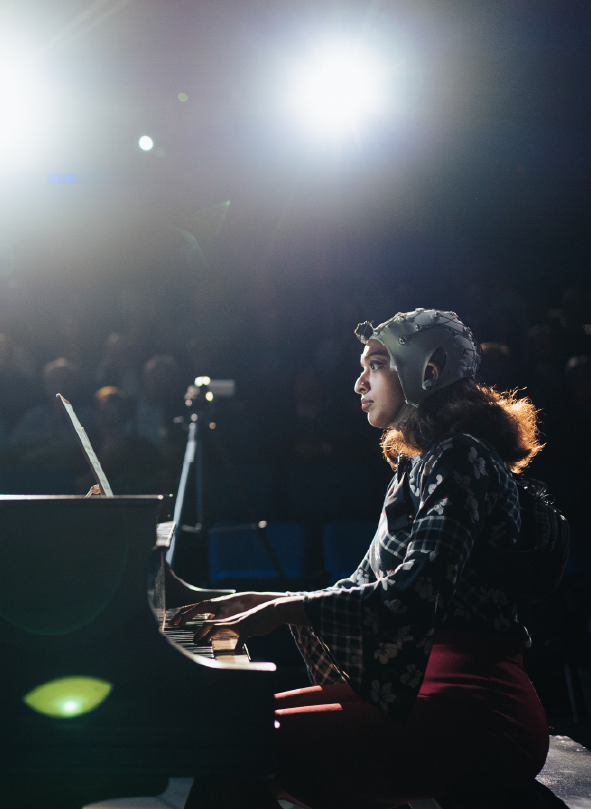
University of Houston BRAIN Center members outfitting pianist Chelsea DeSouza (DMA, '26) with brain-body imaging equipment. Photos by Brandon Martin
To bridge that gap, Anthony founded the Music, Mind and Body Lab, an interdisciplinary initiative exploring how music and creativity shape human cognition and well-being. “It brings together artists and scientists to study creativity in real-world contexts and better understand how creative engagement shapes our lives,” he said.
Anthony is especially focused on moving brain science beyond the lab. “Brains change depending on context: who we’re with, what we’re doing, even the day we’re having,” he said. “Labs offer precision, but they can miss how the brain operates in everyday life.”
By combining live performance with mobile brain-imaging technology, the lab captures neural activity as musicians and dancers rehearse, improvise and respond to one another, revealing how the brain functions in authentic creative experiences.
Rooted in both the Shepherd School of Music and the Medical Humanities Research Institute, and launched alongside Rice’s Brain Institute, the lab reflects the university’s growing investment in brain research. “I’m happy to contribute at a time when Rice’s focus on the brain is intensifying,” Anthony said.
Collaboration is central to the lab’s work. Partnerships with neuroscientist José “Pepé” Luis Contreras-Vidal and Andrew Nordin at the University of Houston and Anna Abraham at the University of Georgia have made it possible to integrate mobile neuroimaging with live performance. “I love collaborating because it leads to discoveries I wouldn’t make on my own,” Anthony said. “And it was also born of necessity. Rice doesn’t have mobile brain-imaging equipment, so partnering with Pepé, Andrew and Anna made this possible. I feel fortunate to be in Houston, one of the few places in the world where this work is happening.”
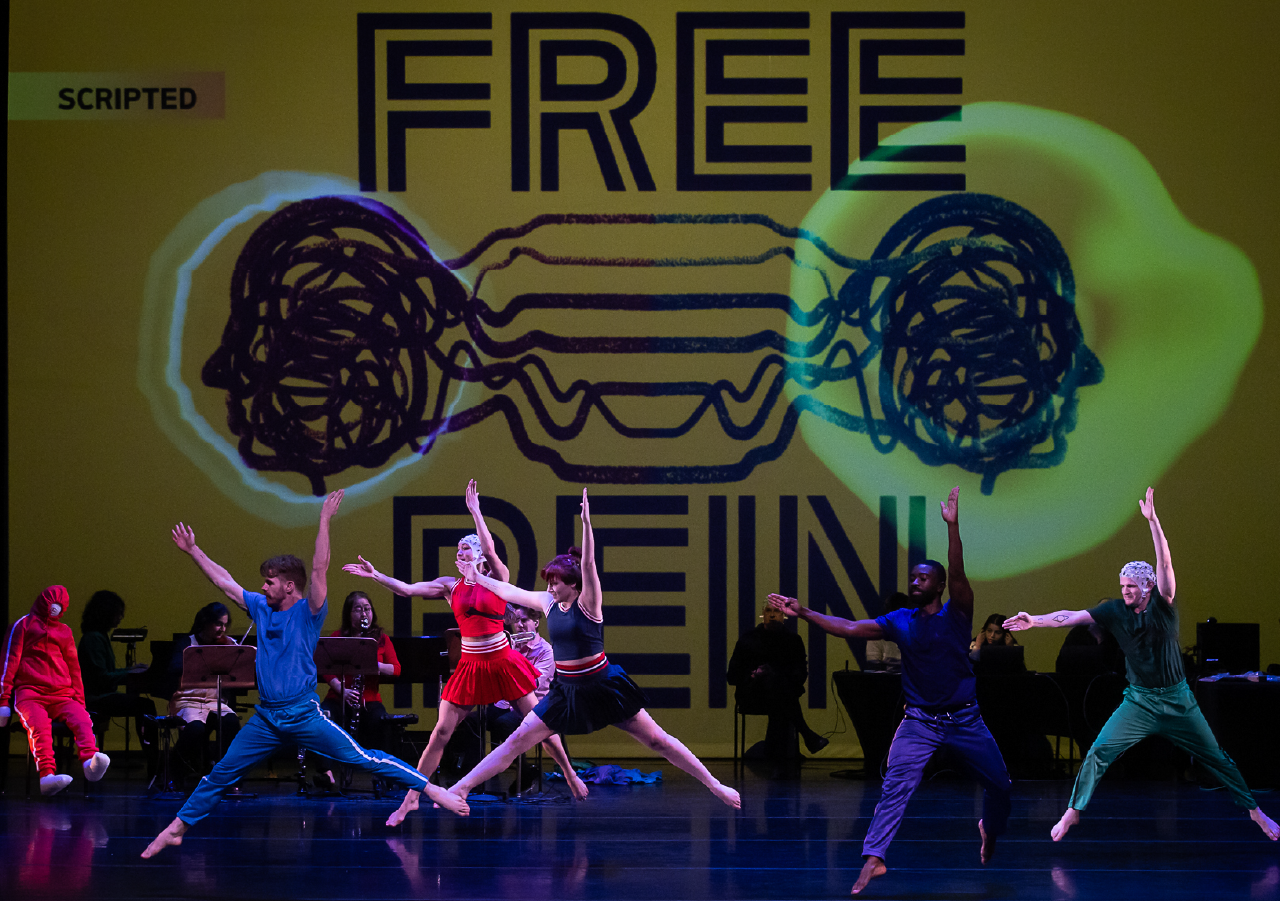
A scene from "Free Rein," in which the dancers and musicians alternate between scripted and improvised sections. Photo by Lynn Lane
That collaborative foundation also supports work in cognitive health with direct implications for aging populations and mental well-being. Through a National Endowment for the Arts Research Lab partnership, Anthony and his collaborators offer music composition workshops to seniors as a potential intervention for mild cognitive impairment, exploring how creative engagement might help slow cognitive decline, improve mood and strengthen quality of life. In a recent study, participants in a six-week workshop showed measurable cognitive gains.
Efforts like these are supported in part by grants from the National Endowment for the Arts, NewMusicUSA, the Mid-America Arts Alliance, the Houston Arts Alliance, the Brown Foundation, Cullen Trust for the Performing Arts and others. Anthony said the lab’s most pressing need is equipment — specifically, four wireless MoBI caps, wearable devices that measure brain activity during movement — which would expand research capacity and open new opportunities to study creativity in real-world settings.
Together, these projects point toward a larger shift: understanding creativity not as a luxury, but as a vital component of human health. From strengthening social connection to supporting cognitive resilience, the lab’s research opens new possibilities for how we approach education, aging and mental health in an increasingly complex world.
“The arts are fountains of information about ourselves, accessing parts of human experience science is still learning to reach,” Anthony said. “Music can be wild, shocking, tender and playful — all of it matters if we want to be in touch with the human spirit.”
Accelerate the Vision
The Music, Mind and Body Lab is exploring how creativity shapes the brain and enhances well-being beyond the concert hall. To learn more or support this work, contact Nancy Giles, senior director of development at the Shepherd School of Music, at ng78@rice.edu or 713-348-4992.
Explore More From Our Current Issue
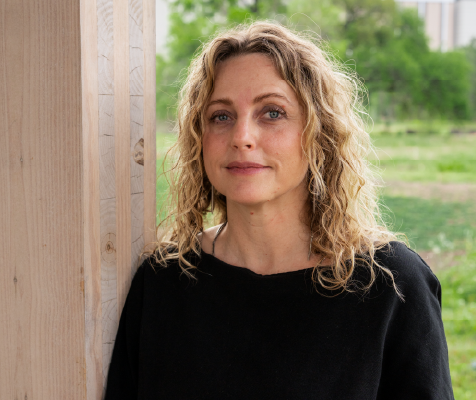
Rice’s new MFA in Creative Writing is rooted in Houston and the Gulf Coast.
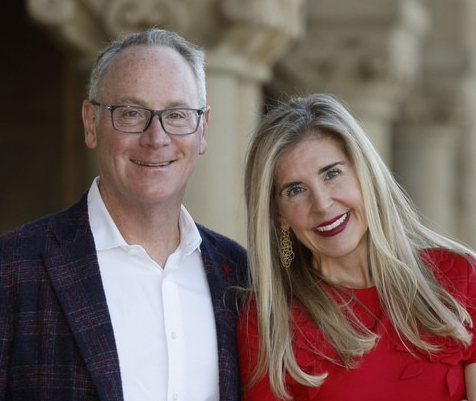
Jenna ’95 and Colin Fisher foster belonging, community and opportunity for all students.
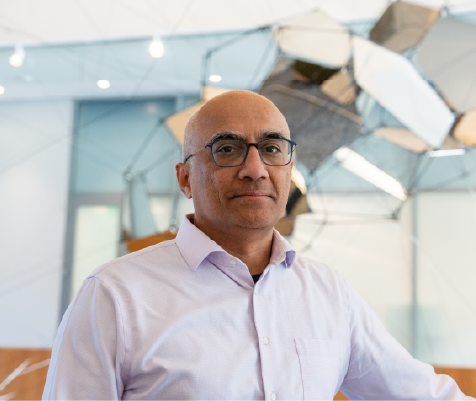
Faculty members are harnessing the power of data science to transform how we deliver care.
Giving to Rice
Development & Alumni Relations
P.O. BOX 1892
Houston, Texas 77251-1892
Phone: 713-348-4991
Email: giving@rice.edu